UNOPS - Blueing the Black Sea Bootcamp and Mentoring

As a partner of Civitta and the Blueing the Black Sea Eco-Innovation Challenge, GOOINN supports environmental ventures in validating their markets, strengthening their business models and preparing for growth.

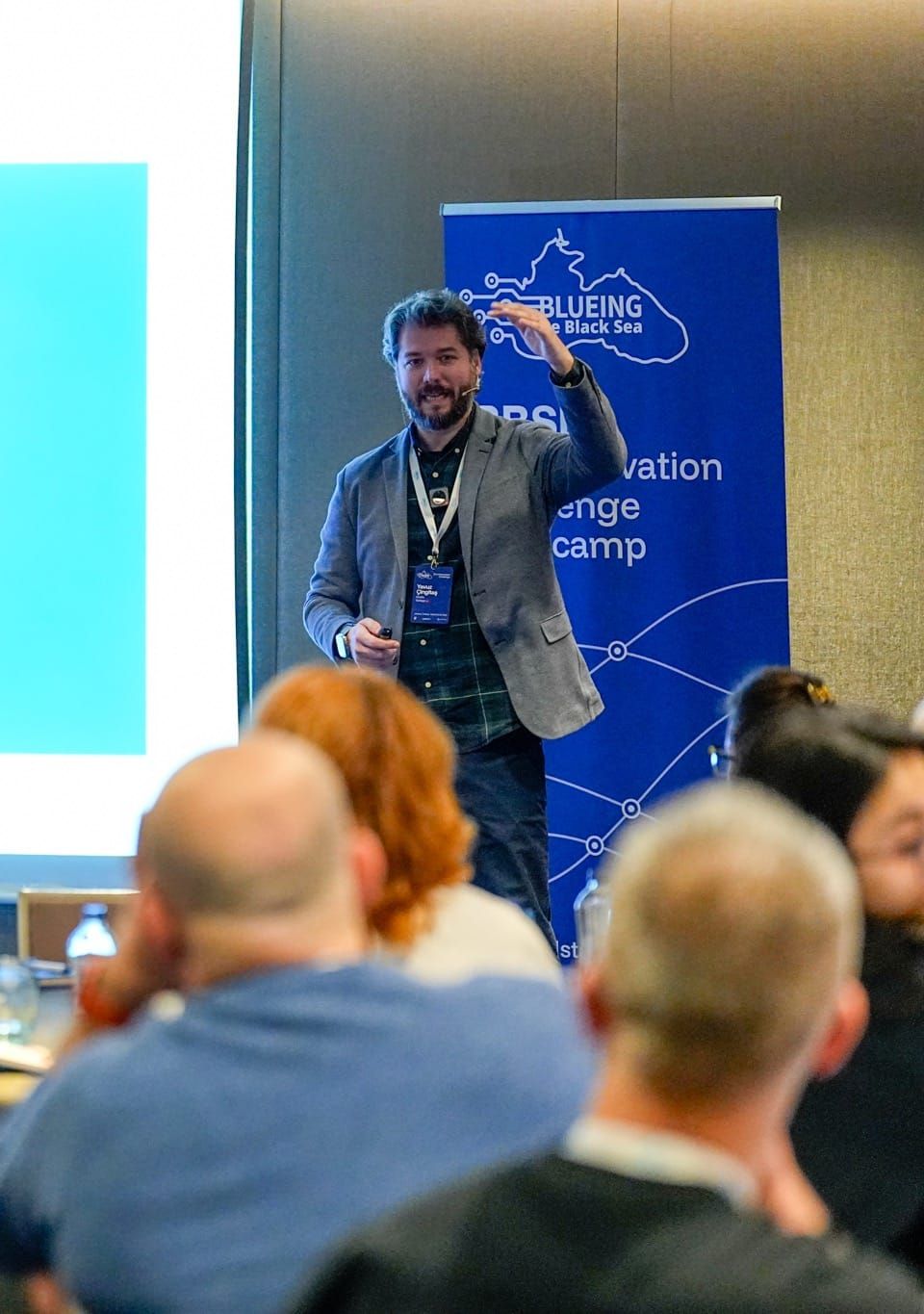
  • Bootcamp Delivery

    Managed and delivered an intensive 3-day bootcamp, helping ventures turn environmental solutions into stronger customer-focused business opportunities. YouTube video -> https://www.youtube.com/watch?v=uhdDYGBuonM

  • Customer & Problem Validation

    Mentored teams to test assumptions, understand real customer needs and validate whether they are solving problems worth solving.

  • Business Model & Acceleration Mentoring

    Supported ventures throughout the acceleration phase to refine their value propositions, business models and paths to market. GOOINN Founder Yavuz's thoughts about process -> https://www.youtube.com/watch?v=omx533un7Mg 
  • _DOA5277.jpg

    PACE Methodology Implementation & Cultural Change

  • PACE Methodology

    Embedded the PACE methodology across ING teams through hands-on training and coaching, enabling faster, evidence-based decision making.

  • Customer Validation

    Introduced customer validation practices that reduced time spent on unproven ideas and improved product clarity.

  • Co-created 10 Products

    Co-created 10 finance-focused internal products, including digital SME banking, chatbots, and innovative loan models.

  • Achived All Goals

    Implemented 10 New Products

    Cultural Change

    Untitled design-2.png

    Develop Innovative Solutions Within Supply Chain

    To develop innovative and sustainable solutions for identifying needs and problems within supply chain operations across different categories.

  • Methodology

    The process was carried out using design thinking and lean startup methodologies. Alongside Mind Map, Problem Prioritization, Persona, Customer Journey Map, Insight Collection, Insight Interpretation, Value Proposition, and Business Model canvases, the workflow included idea-generation slides as well as MVP and MVE testing.

  • Process

    Cross-functional supply-chain teams mapped existing processes and identified key operational problems and personas. Through on-site observations and employee interviews, teams gathered real-world insights, developed solutions, and tested MVPs and MVEs in operational environments to validate their effectiveness.

  • Results & Outputs

    • A notification tool that improves the detection and reporting of mismatches across the end-to-end ice cream distribution journey—from order creation to goods acceptance in stores—by enabling real operational experiences to be captured in the field.

    • An algorithm that enhances picking efficiency in cold-storage warehouses by forecasting optimal product stacking and planning.

  • Bayer Internal Accelerator

    Designing products, services, or business models that improve the patient experience through team-based approaches.

  • Methodology

    Team selection was conducted, and methodologies such as Design Thinking were used to develop new products, services, and business models starting from customer needs.

  • Process

    The process began with an open call across the entire organisation to form teams. Applications were evaluated based on three criteria: innovation knowledge, interest in innovation, and personality analysis. Based on these insights, a team formation workshop was conducted to better understand participants and build effective teams.

  • Results & Outputs

    With additional support from the European Innovation Committee, a hardware project was successfully implemented. The software developed to improve hospital experience was tested within the hospital.

    The experience of visually impaired individuals using medication was improved. Additionally, a measurement method for an eye condition was enhanced, enabling it to be conducted in a smaller space using next-generation hardware.

  • Innovation for Sustainability

    Managing product development activities within an open innovation process focused on the recycling of electronic waste, aligned with the company’s sustainability goals.

  • Methodology

    Using the Design Thinking methodology, tools such as goal setting, problem breakdown, problem selection, persona, and customer journey mapping were applied. This was supported by customer interviews, insight synthesis, business model development, MVP creation, solution validation, and market validation methods.

  • Process

    The process was conducted through one-hour sessions with teams, working alongside our consultants using structured canvases. Innovation tools were completed step by step in a guided and collaborative manner.

  • Results & Outputs

    We have selected 4 teams from hundreds of applications and are providing mentorship to support the development of their products.

  • Cookie Settings